

Abstract
Life insurance underwriting is undergoing a significant transformation as insurers move beyond traditional, manual risk-assessment methods toward data-driven decision-making. Predictive Modeling in life insurance underwriting, powered by machine learning, advanced analytics, and diverse data sources, enables insurers to evaluate mortality risk with greater precision, speed, and scalability. By analyzing historical records alongside behavioral, financial, and digital indicators, predictive models streamline underwriting workflows, reduce dependency on medical examinations, and enhance customer experience through faster policy approvals.
This white paper examines the role of predictive Modeling in modern underwriting, outlining its core methodologies, integration with insurance processes, measurable business benefits, and real-world applications. It also addresses critical considerations such as data privacy, model bias, and regulatory transparency. Ultimately, the paper highlights how predictive analytics is reshaping underwriting into a smarter, more efficient, and customer-centric function, positioning insurers to compete effectively in an increasingly digital insurance landscape.
The Limitations of Traditional Underwriting
Life insurance underwriting forms the foundation of risk management for insurers. It establishes whether an applicant is eligible for coverage and determines the appropriate premium. Traditionally, underwriting has depended on manual assessments of medical histories, lifestyle disclosures, and actuarial tables to evaluate mortality risk. Although these practices have supported the industry for many years, they are now being tested by the expectations of an increasingly digital-first environment.
- Time-Intensive Processes: Manual data gathering and medical examinations frequently result in underwriting cycles that extend over several weeks, leading to customer dissatisfaction and delayed revenue realization.
- High Operational Costs: Physical health checks, laboratory testing, and manual file reviews create substantial expenses for insurers, placing pressure on margins.
- Limited Risk Segmentation: Conventional actuarial approaches categorize applicants into broad risk pools, often resulting in pricing inefficiencies and heightened adverse selection risk.
- Customer Experience Gaps: Modern consumers demand rapid decisions and frictionless digital journeys, expectations that legacy underwriting frameworks often fail to meet.
The insurance sector is experiencing a major transformation fueled by big data, artificial intelligence (AI), and predictive analytics. Predictive Modeling empowers insurers to harness expansive datasets, including demographic, clinical, behavioral, and lifestyle variables, to project risk with far greater precision. This evolution extends beyond technology adoption; it signals a strategic shift toward underwriting that is faster, more intelligent, and deeply customer-centric.
What Predictive Modeling Means for Insurance
Predictive Modeling leverages statistical algorithms, machine learning methodologies, and data mining techniques to anticipate future outcomes using both historical and real-time data. In life insurance underwriting, these models assess mortality risk, policy lapse risk, and fraud probability by analyzing diverse datasets and uncovering patterns that conventional actuarial approaches cannot detect.
Core Concepts and Modeling Methodologies
- Feature Engineering: The practice of selecting, refining, and transforming variables (e.g., age, BMI, lifestyle behaviors) into structured inputs that enhance model effectiveness.
- Training and Validation: Dividing historical datasets into training and validation groups to develop models and evaluate their predictive accuracy.
- Overfitting vs. Under-fitting: Balancing model design so it performs reliably on new data without becoming overly specialized or excessively generalized.
- Model Performance Metrics:
- 0 AUC (Area Under the Curve): Measures classification performance.
- 0 RMSE (Root Mean Square Error): Assesses accuracy in regression-based predictions.
- 0 Lift and Gain Charts: Evaluate the strength and practical value of predictive capability.
- Explainable AI (XAI): Frameworks such as SHAP and LIME that enhance transparency by clarifying how models generate predictions.
Common Algorithms Used
- Logistic Regression: For binary outcomes such as approve/decline decisions.
- Decision Trees & Random Forests: For hierarchical risk segmentation.
- Gradient Boosting Machines (GBM): For high predictive accuracy in complex datasets.
- Neural Networks: For deep learning applications in large-scale, unstructured data.
- Survival Analysis Models: Specifically designed for predicting time-to-event outcomes like mortality.
Data Sources Powering Modern Underwriting
- Traditional Data: Age, gender, occupation, medical history, family health background.
- Behavioral Data: Lifestyle choices, smoking habits, exercise frequency.
- Financial Data: Credit scores, spending patterns.
- Digital Footprints: Social media activity, online behavior.
- IoT and Wearables: Heart rate, sleep patterns, physical activity metrics.
How Predictive Models Integrate into Underwriting Workflows
Predictive Modeling is not a standalone tool; it integrates with:
- Underwriting Engines: Real-time scoring during application submission.
- Risk Management Systems: Continuous monitoring of portfolio risk.
- Customer Relationship Management (CRM): Personalized offers based on predictive insights.

Figure 1: Predictive Modeling in Underwriting Decision
Role in Underwriting
Predictive Modeling enhances underwriting in several ways:
Accelerated Underwriting
- Delivers instant decisions for eligible applicants using predictive risk scores.
- Improves customer experience by reducing application complexity and wait times.
- Optimizes operational efficiency by automating low-risk case approvals.
Risk Scoring
- Create a combination of multiple data points into a single risk score.
- Enables granular segmentation beyond traditional age-band tables, improving pricing accuracy.
Fraud Detection
- Identifies anomalies in application data using anomaly detection algorithms.
- Flags suspicious patterns early, reducing fraudulent claims and losses.
Integration with Workflow
- Predictive models can be embedded into underwriting platforms for real-time scoring during application submission.
- Supports hybrid models where human underwriters handle complex cases while AI manages routine decisions.
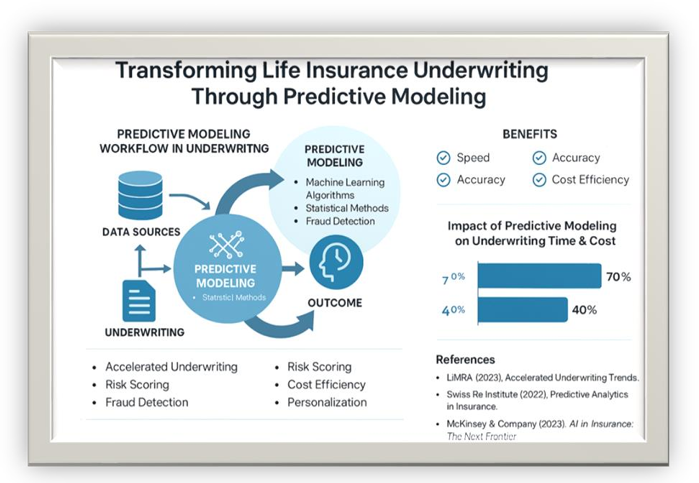
Figure 2: Predictive models in life insurance underwriting
Benefits: Speed, Accuracy, Cost Efficiency, Hyper‑Personalization
Speed and Turn-Around-Time
- Reduces underwriting time from weeks to hours.
- Improves customer experience with instant decisions and digital onboarding.
Accuracy
- Enhances mortality risk prediction using thousands of variables.
- Reduces adverse selection by identifying hidden risk factors.
Cost Efficiency
- Cuts medical exam costs significantly.
- Optimizes resource allocation for complex cases, freeing underwriters for high-value tasks.
Hyper Personalization
- Tailoring premiums based on individual risk rather than broad categories.
- Enables dynamic pricing strategies that reflect real-time health and lifestyle data.
Predictive Modeling significantly reduces underwriting timelines and expenses by automating risk evaluation and eliminating the need for medical examinations in low-risk cases. Conventional underwriting typically depends on manual information gathering, physician reports, and laboratory testing, processes that can extend decision cycles by several weeks. By leveraging machine learning models and non-traditional data sources, insurers can generate real-time risk scores and issue approvals within hours rather than weeks. According to industry research, this level of automation delivers approximately a 70% reduction in underwriting turnaround time and nearly a 40% decrease in operational costs (LIMRA, 2023; McKinsey & Company, 2023).
XYZ Life Insurance implemented predictive Modeling in life insurance underwriting to streamline its underwriting process. Previously, the average policy issuance time was 15 days, and the cost per application was $150, including medical exams and manual reviews. After adopting predictive analytics and integrating machine learning models into its underwriting engine:
- Underwriting Time: Reduced from 15 days to 4 days (around 73% improvement).
- Underwriting Cost: Dropped from $150 to $90 per application (around 40% savings).
- Customer Satisfaction: Increased by 25%, as applicants experienced faster approvals and fewer invasive medical requirements.
This transformation not only improved operational efficiency but also positioned XYZ Life Insurance as a leader in digital underwriting innovation (Swiss Re Institute, 2022)
Metric
- Underwriting Time
- Underwriting Cost
Before Predictive Modeling
- 100% (Baseline)
- 100% (Baseline)
After Predictive Modeling
- 30% (70% reduction)
- 60% (40% reduction)
Table 1: Swiss Re Institute, 2022

Figure 3: Impact of use of predictive models in life underwriting
Challenges: Data Privacy, Bias, Explainability, Monitoring
Data Privacy
- Compliance with regulations like GDPR and HIPAA is critical.
- Secure handling of sensitive health and behavioral data is non-negotiable.
Model Bias
- Risk of discrimination if models use biased data.
- Requires fairness audits and explainable AI to ensure ethical practices.
Explainable
- Regulators and customers demand transparency in underwriting decisions.
- Use interpretable models or explainable tools (e.g., SHAP, LIME) to clarify predictions.
Continuous Monitoring
- Models degrade over time due to changing behaviors and market conditions.
- Requires ongoing validation and recalibration to maintain accuracy.
Outlook
- AI-driven Underwriting: Fully automated underwriting for low-risk cases will become standard.
- Wearable Integration: Real-time health data from smart devices will feed predictive models for dynamic risk assessment.
- Behavioral Analytics: Lifestyle patterns and digital footprints will play a major role in risk scoring.
- Personalized Premiums: Dynamic pricing based on continuous data feeds will redefine customer engagement.
Conclusion - The Future of AI-Driven Underwriting
Predictive Modeling is revolutionizing life insurance underwriting by improving accuracy, reducing costs, and enhancing customer experience. While challenges such as data privacy and bias remain, insurers that adopt predictive analytics will gain a competitive edge in a rapidly evolving market. The future of underwriting is not just faster, it’s smarter, fairer, and more personalized.
About the Author

Arka Dasgupta is a seasoned Insurance professional with 12+ years of experience and currently serves as an Associate Consultant at Coforge. With strong skills in business analysis, insurance product configuration, and business process reengineering, he has contributed to several transformation programs across the Life Insurance value chain. Arka is a LOMA certified ALMI, recognized for his in depth understanding of insurance business and operations. His work focuses on applying practical innovation and AI-driven thinking to modernize insurance operations. His thought leadership reflects a strong blend of domain mastery and technological vision.