
-1-1.webp)
Ensure ISO 13485–aligned Verification & Validation for safer and compliant medical devices.
Accelerate compliance. Reduce risk. Improve patient safety.
Coforge Digital Assurance delivers end-to-end medical device testing services that align with ISO 13485:2016, FDA 21 CFR Part 820, and global regulatory expectations. From verification & validation (V&V) and risk-based testing to CSV and IoT medical device QA, we help MedTech organizations confidently launch compliant, reliable, and secure devices.
Proven impact

+30% increase in release capacity

85% reduction in deployment costs

50% improvement in automation coverage for connected/IoT devices
+30% increase in release capacity
85% reduction in deployment costs
50% improvement in automation coverage for connected/IoT devices
IoT/Smart Medical Device QA
We test connected medical devices and smart healthcare systems (e.g., intelligent beds, sterilization equipment, home-care kits) for:

Connectivity, safety, and resilience under real-world conditions

Automation at scale for firmware, apps, and cloud components

Interoperability across device ecosystems and third-party integrations

Security & privacy controls appropriate for regulated environments
Connectivity, safety, and resilience under real-world conditions
Automation at scale for firmware, apps, and cloud components
Interoperability across device ecosystems and third-party integrations
Security & privacy controls appropriate for regulated environments
Result: Up to 50% improvement in automation coverage and faster, safer releases for connected devices.
Awards & Recognitions
Coforge wins Med Tech Breakthrough Award 2025 for Clinical Trial Innovation with Espero Health
-1.webp?width=800&height=462&name=MedTech-Award-1%20(1)-1.webp)
Our Expertise in Medical Device Verification & Validation
We support Class I, II, and III devices across Diagnostics, Imaging, Orthopedics,
Surgical, Cardiology, and Dental specialties with a comprehensive service portfolio:
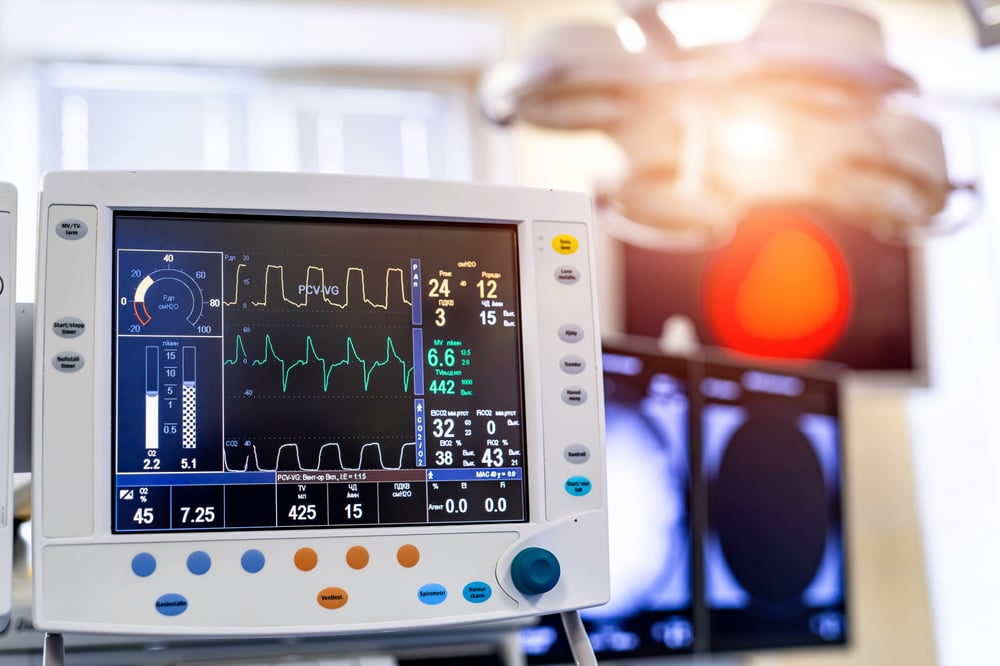
- Medical device verification (requirements, design, implementation)
- Medical device validation (intended use, clinical context, user workflows)
- Risk-based testing using FMECA to identify critical failure modes early
- Hardware-software integration testing for system reliability and safety
- Interoperability testing across device interfaces and data flows
- Software lifecycle testing aligned to your SDLC and quality system
- Analytical instrument validation and method/system suitability checks
- User acceptance testing (UAT) with clinical/user personas
Certifications & Credentials
-
ISO 13485:2016 compliant testing processes
-
Deep expertise with FDA 21 CFR Part 820 quality system requirements
-
Structured validation artifacts: IQ/OQ/PQ protocols, RTMs, SOPs, and sign-off packs

Medical Devices Testing Center of Excellence
Coforge’s Medical Device Testing CoE brings domain-rich expertise, tooling accelerators, and reusable validation assets to compress timelines and ensure consistency:

Testing strategy designed for regulatory bodies and public safety expectations

Risk-based testing aligned to FMECA and device criticality

In-house training & certification programs for Healthcare & Life Sciences

Coverage-driven approach that targets the most defect-prone areas

Lifecycle V&V assets including IQ/OQ/PQ templates, RTMs, and SOPs

Metrics & quality dashboards for audit-ready reporting
Benefits Delivered to Global Healthcare Clients

Regulatory submission readiness with complete IQ/OQ/PQ and traceability

Accelerated release cycles and time-to-market

Reduced risk via FMECA-driven validation

Improved quality & reliability across devices and software

Cost optimization through automation and reusable validation assets

Actionable reporting for audits and continuous improvement
Representative Use Cases
Imaging & Diagnostics

Verification of acquisition, processing, and UI; performance validation under varied workloads; compliance documentation for FDA 510(k).
Orthopedic Implants

Firmware-app integration testing; risk-based validation of telemetry; UAT with clinician workflows.
Surgical Devices & Instruments

Hardware-software integration; sterilization cycle validations; traceability from hazards to test evidence.
Cardiac Pacemakers & Wearables

Connectivity, safety, and reliability testing; battery & telemetry performance; validation artifacts for submission.
Dialysis & Lab Analyzers

Analytical method validation, system suitability, QC checks, and CSV for lab informatics.
Connected/IoT Devices

End-to-end interoperability, security, and upgrade validation across device–app–cloud.
Regulatory & Compliance Frameworks
- ISO 13485:2016 – Quality management for medical devices
- FDA 21 CFR Part 820 – Quality System Regulation (QSR)
- CSV (Computer System Validation) – GxP aligned validation of computerized systems
- IQ/OQ/PQ – Installation, Operational, and Performance Qualification
- Risk based testing – FMECA to prioritize patient safety
Outcome: Submission readiness (FDA/CE), compliant documentation, and audit ready traceability.

Regulatory & Compliance Frameworks

Types of Medical Device Testing We Conduct
- Lifecycle V&V (verification and validation)
- GUI & Non-GUI Testing
- Performance & Reliability Testing
- Compliance Testing
- Interoperability Testing
- Behavior Testing
- User Acceptance Testing (UAT)
- Hardware / Software Integration Testing
- Analytical Instrument Validation
- System Suitability & Quality Control Checks
Computer System Validation (CSV) Capabilities
Our CSV model ensures regulated systems and tools used across R&D,manufacturing, labs, and post-market processes meet compliance requirements:

Validation approach aligned to development and SDLC

Risk-based validation for hardware, software, and peripheral devices

Authentication & data integrity controls aligned to regulatory expectations

Timely, traceable verification with external/internal stakeholder reporting

Comprehensive IQ/OQ/PQ documentation packs and RTMs